⚡ Quick Summary (TL;DR)
Over 70% of restaurant website traffic comes from mobile, and most visitors decide in the first few seconds whether to stay or bounce. A Windsor restaurant website that fills seats needs: a fast mobile experience, an HTML menu Google can actually read, prominent hours and location, real food photography, and a clear path to reserve or order. This guide covers what works, what doesn't, and how to stop losing customers to competitors whose websites just work better.
Someone in Detroit searches “Windsor restaurants open tonight” on their phone while their partner books the tunnel crossing. Your restaurant comes up. They tap your website. It takes four seconds to load, the menu is a PDF they can’t read on mobile, and they can’t find your hours.
They pick the place two listings below you.
This happens constantly. Windsor’s dining scene is genuinely competitive — a mix of long-established local institutions, new concepts riding the city’s growth, and a steady stream of Detroit visitors crossing the border specifically to eat here. The restaurants pulling ahead aren’t always the ones with the best food. They’re the ones whose websites make it easy to say yes.
What Windsor’s Restaurant Market Actually Looks Like Right Now
Windsor’s food scene is specific enough that a generic restaurant website playbook doesn’t quite fit.
The Detroit factor is real. A meaningful percentage of Windsor restaurant customers are American — crossing the Ambassador Bridge or the Tunnel specifically to dine out, shop, and experience something different from what’s available in Metro Detroit. These visitors are searching before they cross, usually on a phone, often the same day. They don’t know your neighbourhood landmarks and they need clear directions, border proximity info, and a site that answers their questions without them having to dig.
WindsorEats has become a genuine discovery platform. A feature on WindsorEats or a listing in their Food Hall drives real traffic. But that traffic lands on your website — and if your site can’t close the loop, the referral dies there.
The downtown and Walkerville food corridors are dense. Customers on Ouellette or Ottawa Street are often making same-session decisions — phone in hand, comparing two or three options in real time. Your website’s first screen matters as much as your signage.
The farmers’ market and event calendar are growing. With the Downtown Windsor Farmers’ Market expanding in 2026 and events like the Sip & Thrift Vintage Night Market drawing crowds, Windsor diners are an engaged, local-first audience. Restaurants that speak to that identity — local sourcing, neighbourhood roots, seasonal menus — convert better with this crowd.
The Five Things Most Windsor Restaurant Websites Get Wrong
Most Windsor restaurants have at least two of these problems.
1. The PDF Menu
PDF menus are the single most damaging mistake a restaurant website can make in 2026, for two reasons.
First, Google can’t index them properly. When a Windsor diner searches “best lamb shank Windsor” or “restaurants with patio Walkerville,” your dishes need to exist as readable text on your website for Google to surface your restaurant in that search. If your menu only lives inside a PDF, you’re invisible for every dish-specific search.
Second, PDF menus are miserable on mobile. They require zooming, scrolling sideways, and fighting with the viewer — on a phone, in a parking lot, while someone is deciding right now whether to come in. Roughly 70% of your website visitors are on mobile. A PDF menu is a friction point that sends those visitors to a competitor.
The fix: An HTML menu page with your dishes in actual text. It doesn’t need to be elaborate — a clean page with sections, dish names, descriptions, and prices does the job. Update it when your menu changes. Google will thank you.
2. Hours and Location Buried or Missing
The two questions most restaurant website visitors want answered first are: “Are you open right now?” and “Where exactly are you?” These should be visible without scrolling — on the homepage, in the header, or in a persistent footer on every page.
For Windsor restaurants specifically, include your parking situation and, if you’re targeting Detroit visitors, your proximity to the border crossings. “10 minutes from the Ambassador Bridge” on your About page is a useful detail that many cross-border diners are actively looking for.
3. No Clear Call to Action
A restaurant website has one or two jobs: get people to make a reservation, or get them to place an order. If your homepage doesn’t have a clear, prominent button for one of those actions — visible on mobile without scrolling — you’re leaving money on the table.
“Reserve a Table” and “Order Online” should be the two most obvious things on your site. Not buried in the navigation. Not a small text link. A real button, above the fold, on every device.
4. Weak or Missing Food Photography
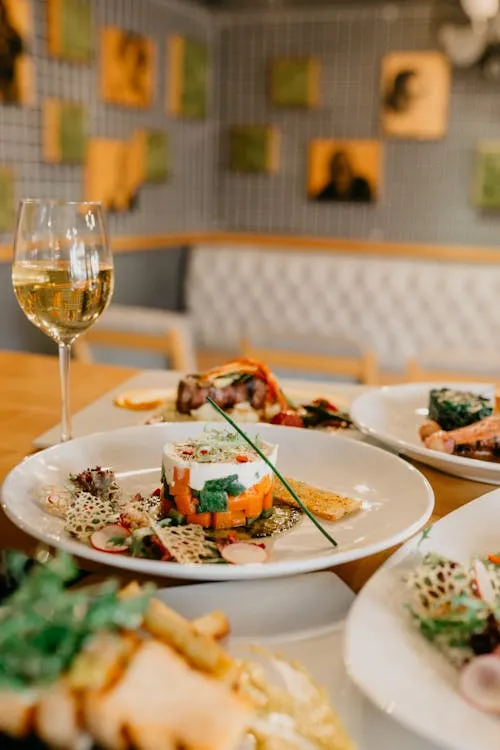
The numbers are unambiguous: 45% of restaurant website visitors look for food photos first, and restaurants with professional food photography see 30–40% higher reservation conversion rates. Poor photos actively damage perception — 67% of diners say low-quality food photos make them question food quality.
Stock photos of generic dishes don’t help. A bright phone photo taken in bad lighting barely helps. What works is a few hours with a good food photographer, shooting your actual menu on your actual plates in your actual space. One good session produces enough content for your website, your social media, and your Google Business Profile photos for a year.
If a full photography session isn’t in the budget right now, natural-light phone photos taken during prep — before service, in good light — are better than nothing. But the photography investment pays for itself quickly in reservations.
5. Slow Mobile Load Times
Over half of restaurant website visitors leave if the page takes more than three seconds to load. Restaurants often have image-heavy websites — hero photos, gallery sections, food shots — that load fine on desktop Wi-Fi and terribly on a phone over LTE.
The fix involves compressing and properly formatting images (WebP format), using a quality host, and in some cases, a CDN. This is a developer task, but it has a direct impact on how many mobile visitors actually stay on your site long enough to make a decision.
What a High-Converting Windsor Restaurant Website Needs
A Homepage That Answers the Four Questions Immediately
Within three seconds of landing on your homepage, a visitor should know:
- What kind of food you serve
- Where you are
- Whether you’re open
- What to do next (reserve, order, view menu)
Everything else — your story, your team, your press coverage — is secondary. Most visitors never scroll past the first screen if it doesn’t answer those four things.
A strong restaurant homepage layout:
- Hero section: One excellent food photo or a video of your space, your restaurant name, a one-line description (“Detroit-style pizza in the heart of Walkerville”), and two buttons: “View Menu” and “Reserve a Table”
- Hours and location: Immediately below the hero, or in a persistent header bar
- 3–4 menu highlights: Visual cards showing signature dishes with photos and names — not your full menu, just the dishes that make people want to come in
- Social proof: Google review rating, a WindsorEats feature badge, or two or three short customer quotes
- About section: Brief — two or three sentences about who you are and what makes you worth the visit
- Footer: Full address, phone number, hours, links to your Google Maps listing, social media
An HTML Menu That Google Can Read
Your menu page should be a real webpage, not a PDF link. Structure it logically:
- Section headings (Starters, Mains, Desserts, Drinks)
- Dish names in clear text
- Short descriptions that include ingredients customers search for
- Prices
If you have seasonal menu items, keep a permanent “current menu” page and update it. If you have separate lunch and dinner menus, both should be separate pages or clearly labelled sections — not a single PDF with both.
SEO benefit: A text-based menu means Google can index your individual dishes. A Windsor restaurant with “smoked brisket,” “Lake Erie perch,” or “Detroit-style pizza” in readable HTML has a real chance of showing up when someone searches those terms with a location modifier.
Online Reservations (Integrated, Not a Phone Number)
A phone number works. An integrated reservation system converts better — especially for the Detroit visitors and younger Windsor diners who’d rather not make a call.
OpenTable, Yelp Reservations, and Resy all integrate cleanly with most restaurant websites. The choice between them depends on your market (OpenTable has stronger cross-border brand recognition with Detroit diners), your existing POS, and how much you want to pay in cover fees.
At minimum, if you’re not using a reservation platform, make your booking phone number a tap-to-call link on mobile — tel: links convert far better than a number someone has to copy and dial manually.
The Online Ordering Question: Direct vs. DoorDash
If you offer takeout or delivery, this decision has a significant impact on your margins.
Third-party platforms (DoorDash, Uber Eats, SkipTheDishes):
- DoorDash charges 15–30% commission per order depending on your plan
- When you factor in marketing adjustments, refunds, and indirect costs, actual cost per order often exceeds 40% of revenue
- You don’t own the customer relationship or data
- Visibility on the platform has real value — you’re reaching customers who wouldn’t have found you otherwise
Direct online ordering (on your website):
- Payment processing only: roughly 2.9% + 30¢ per transaction
- You own the customer data — email, order history, preferences
- Average order values are typically 10–15% higher when customers order directly
- No platform can change their fee structure and affect your business overnight
The practical approach for most Windsor restaurants: use DoorDash or SkipTheDishes for discovery — to reach customers who are browsing the platform and don’t know you yet — while driving your regulars toward direct ordering through your website. A “Order Direct and Save” mention on your packaging, your social media, and your website works. Regular customers will order direct if you make it easy.
For direct ordering, systems like Square Online, Toast, or Ordering.co integrate with your existing POS and go live on your website with minimal setup.
A Google Business Profile That Matches Your Website
Your Google Business Profile is often the first thing a Windsor diner sees — before they ever reach your website. It needs to be consistent with your website and fully optimized:
- Primary category set correctly (“Pizza Restaurant,” not just “Restaurant”)
- All secondary categories that apply added
- Menu linked (your HTML menu URL, not a PDF)
- Hours accurate and updated for holidays
- Photos updated regularly — the most-viewed photos on your GBP directly affect whether someone clicks through
- Posts used for specials, events, and seasonal menu changes
Inconsistencies between your website and your GBP — different hours, different address format, different phone number — damage both your local search rankings and customer trust. For a full walkthrough of GBP setup, see our guide on how to set up Google My Business and dominate the map pack.
Schema Markup for Restaurants
Restaurant schema is a block of code added to your website that explicitly tells Google what your site is about: your name, address, phone number, hours, cuisine type, price range, and menu URL. It doesn’t change how your site looks — it changes how Google reads it.
Properly implemented restaurant schema helps Google surface your business accurately in search results and can earn your star rating and hours to appear directly in the search result snippet. Most website platforms can add this via a plugin or a small code addition — it’s a half-hour task that improves search visibility for the life of your site.
A Note on DIY Website Builders for Windsor Restaurants
Squarespace and Wix have decent restaurant templates. If you’re a new restaurant and you need to be online quickly with a limited budget, a well-configured Squarespace or Wix site is a legitimate starting point — especially if it means getting your HTML menu, hours, location, and a reservation link live this week rather than in six weeks.
The limitations surface quickly when you need custom functionality: a real online ordering integration, a complex reservation flow, event ticketing, or anything beyond what the templates support. At that point, a custom WordPress or headless site starts making economic sense.
The platform question is really a timing and budget question. For more on what different levels of investment get you, see our guide on how much a website costs in Canada.
How Databending Works With Windsor Restaurants
Every customer who searches for your restaurant sees the result. The gap between a site that converts and one that doesn’t is measured in covers and orders, not abstract metrics.
We’ve worked with Windsor food and beverage businesses on everything from full custom builds to focused fixes: converting a PDF menu to indexed HTML, integrating an online ordering system, improving mobile load times, or connecting a GBP to a rebuilt homepage. We approach it the same way we approach every Windsor web design project — what does this site need to do, who is it for, and what’s currently stopping it from doing that.
Ready to Build a Windsor Restaurant Website That Actually Works?
If your current site is losing customers to better-optimized competitors, or you’re opening something new and want to get the digital foundation right from day one, let’s talk.
Book a free consultation with Databending
Or explore more: